
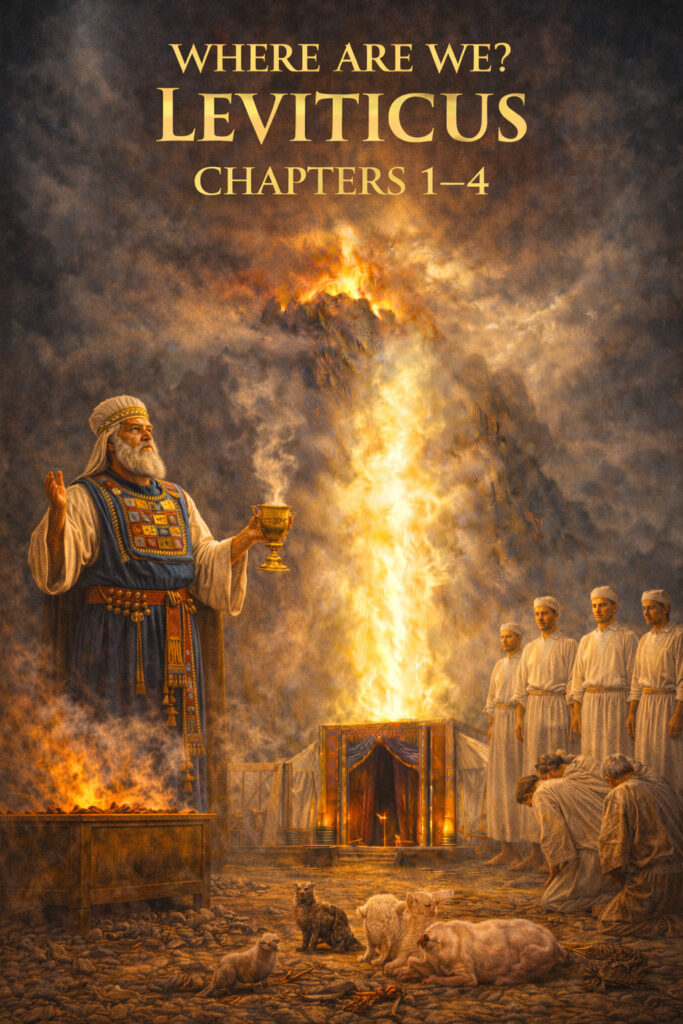
Time & Place
- Time: 1491 BC
- Location:
- Wilderness of Sinai (Exod 19:1–2)
- Tabernacle (Lev 1:1)
Where Are We in the Text?
- The LORD speaks to Moses from the tabernacle following its erection and indwelling by His glory (Lev 1:1; Exod 40:34–38).
- Leviticus 1–3 describe the burnt offering (Lev 1:1–17), the meat (grain) offering (Lev 2:1–16), and the peace offering (Lev 3:1–17).
- Leviticus 4 introduces the sin offering, addressing unintentional sin for priests, the congregation, rulers, and individuals (Lev 4:1–35).
Where Are We in Time?
- These chapters occur after the Mosaic Covenant has been given and ratified (Exod 19–24).
- Israel remains encamped at Sinai, and the tabernacle is functioning as the place of divine communication (Lev 1:1).
- The sacrificial system is being established while Israel remains at Sinai.
Where Are We on the Map?
- Wilderness of Sinai: Location of Israel’s encampment during covenant instruction (Exod 19:1–2).
- Tabernacle: Place from which the LORD speaks and where offerings are brought (Lev 1:1).
Where Are We in God’s Program? (Dispensational)
- Israel is a covenant nation under the Mosaic Law with an active sacrificial system (Exod 24:7–8; Lev 1–4).
- Priestly mediation and prescribed sacrifice govern Israel’s approach to God within the theocratic system.
Why This Matters
- These chapters establish the foundational sacrificial framework governing Israel’s worship under the Mosaic Covenant (Lev 1–4).
- Provision is made for both approach to God and the handling of unintentional sin.
How This Reading Relates to What Follows
- Additional offerings and priestly regulations will be detailed (Lev 5–7).
- Laws governing priestly consecration and service will follow (Lev 8–10).
Summary Orientation
- The LORD speaks from the tabernacle at Sinai (Lev 1:1).
- Instructions are given for the burnt, meat (grain), peace, and sin offerings (Lev 1–4).
- Regulated sacrificial worship is established for Israel under the Mosaic Law.